


Descripción del producto
El ARO Slow Feeder™ es un alimentador de granos de café compacto y recargable, diseñado para controlar la velocidad a la que los granos entran en las muelas de su molino. Un motor de velocidad variable y un sistema de alimentación en espiral controlado trabajan juntos para dosificar gradualmente los granos de café tostados enteros en el molino, en lugar de verter la dosis completa en la cámara de molienda de una sola vez.
El ARO Slow Feeder™, con patente en trámite, está diseñado para mantener su molino bajo una carga más ligera y constante, logrando un proceso de molienda más suave y uniforme. Al introducir los granos de manera más gradual, el Slow Feeder ajusta la distribución del tamaño de las partículas, reduce la presencia de finos y trozos grandes (boulders), mejora la uniformidad de la pastilla de café y produce extracciones más limpias con mayor claridad en métodos de filtrado.
Esta versión recargable añade carga USB-C, una batería interna recargable, recuperación automática de atascos, una luz LED de estado integrada y apagado automático a los 5 minutos si se deja encendido. Los imanes de tierras raras y los pines de alineación de acero inoxidable hacen que el montaje sea preciso y repetible, mientras que el sistema de adaptador modular permite la compatibilidad con una amplia gama de modelos de molinos.
Características principales
- Diseño con patente en trámite: El ARO Slow Feeder™ es objeto de solicitudes de patente de utilidad y diseño que cubren los aspectos funcionales y ornamentales del producto, incluyendo el dispositivo en sí, la arquitectura de alimentación de granos y el diseño del producto.
- Batería recargable USB-C: Alimentado por una batería de iones de litio interna de larga duración, proporciona aproximadamente de 6 a 8 horas de tiempo total de funcionamiento del motor, o aproximadamente de 2 a 3 meses de uso doméstico típico. Recárguelo cómodamente con cualquier fuente de alimentación USB-C estándar de 5V.
- Control de alimentación de velocidad variable: Controle con precisión la velocidad a la que los granos entran en las muelas. Mantenga una carga constante en las muelas durante toda la molienda para reducir la variación en el tamaño de las partículas, el calor y la carga sobre su molino. Ajuste su velocidad preferida una vez y luego use el botón de encendido para iniciar y detener cada ciclo de alimentación.
- Recuperación automática de atascos mediante inversión: El Slow Feeder monitorea la resistencia en el mecanismo de alimentación. Si se detecta resistencia, el LED parpadea 3 veces y la placa de alimentación en espiral se invierte brevemente antes de reanudar la alimentación hacia adelante. Esto despeja posibles atascos mientras reduce la tensión innecesaria sobre el motor.
- Indicador de estado LED: El LED integrado proporciona información rápida y fácil de leer sobre el encendido, la carga, la carga completa, la batería baja, la recuperación de atascos y el estado de protección de la batería, para que siempre sepa exactamente qué está haciendo el alimentador.
- Apagado automático de 5 minutos: Si se deja encendido, el alimentador se apaga automáticamente después de 5 minutos para preservar la vida útil de la batería y mantener su flujo de trabajo sin preocupaciones.
- Compatible con RDT (Técnica de la gota de Ross): Funciona con la técnica de la gota de Ross, permitiendo que los granos ligeramente humedecidos se muevan suavemente por el conducto de alimentación sin pegarse a la placa de alimentación ni quedar atrapados en el mecanismo.
- Diseño ultracompacto: Diseñado para caber en la palma de su mano, el Slow Feeder añade una alimentación eléctrica controlada sin ocupar mucho espacio. Su diseño compacto y extraíble hace que sea rápido y fácil moverlo del molino a la báscula, de vuelta al molino o entre molinos compatibles.
- Sistema de alineación magnética: Los imanes de neodimio y los pines de acero inoxidable garantizan una alineación precisa y repetible, así como un ajuste seguro. Desmonte el Slow Feeder para dosificar, limpiar o cambiar rápidamente entre adaptadores de molino compatibles.
- Dose directamente sobre una báscula: Retire el alimentador completo del adaptador del molino y colóquelo directamente sobre su báscula para pesar los granos en la tolva. Una vez cargado, colóquelo de nuevo en el adaptador usando el sistema de alineación magnética para un flujo de trabajo limpio y repetible sin necesidad de una taza de dosificación separada.
- Incluye tapa de bajo perfil y fuelle de silicona: Cubra la tolva para evitar que entre polvo y suciedad, o utilice el fuelle de silicona incluido después de moler para purgar los residuos del molino para un flujo de trabajo más limpio y consistente.
- Funciona como tolva de dosis única: Retire el mecanismo de alimentación y conecte la tolva directamente al adaptador para omitir la alimentación lenta cuando lo desee. Esto permite que la dosis completa se alimente directamente en el molino como una tolva de dosis única tradicional.
Por qué es importante la alimentación lenta
La alimentación lenta es el proceso de introducir los granos de café en el molino gradualmente en lugar de verterlos todos a la vez. Al controlar la velocidad de alimentación, el molino funciona bajo una carga más ligera y constante, permitiendo que las muelas corten cada grano limpiamente en lugar de aplastarlo. Esto resulta en una distribución del tamaño de las partículas más uniforme, menos finos y menos acumulación de estática. La fricción reducida también disminuye la generación de calor, lo que ayuda a preservar los aromas y aceites naturales del café. La alimentación lenta hace que el molino funcione de manera más suave y silenciosa, al tiempo que prolonga la vida útil de las muelas y el motor.
Estas mejoras aumentan la calidad del café tanto en espresso como en filtrado. Cuando los granos molidos son uniformes, el agua fluye más equitativamente a través de la pastilla de espresso, reduciendo el "channeling" y la extracción desigual. El resultado es una taza equilibrada con mayor claridad, dulzura y consistencia. Debido a que la alimentación lenta crea un perfil de molienda más grueso con menos finos, es posible que necesite ajustar su molino a un nivel más fino para alcanzar el mismo tiempo de extracción.
En los métodos de filtrado, menos finos significa que el agua puede pasar a una velocidad constante sin obstruir el filtro, produciendo una infusión más limpia con menos amargor y sedimentos. Los estudios y las pruebas profesionales han demostrado que la alimentación lenta puede aumentar el rendimiento de extracción y mejorar el equilibrio del sabor. Incluso un aumento modesto en la eficiencia de la extracción se traduce en más sabor y complejidad en la taza.
Tanto para baristas domésticos como profesionales, la alimentación lenta aumenta la eficiencia del molino sin necesidad de cambiar ninguna pieza del mismo. Es una actualización simple que ofrece beneficios inmediatos y mejora la riqueza en el espresso y la claridad en el café de filtro. En resumen, la alimentación lenta transforma un buen molino en una máquina de alto rendimiento, produciendo un café molido más limpio y uniforme, y una taza más suave y consistente, sin importar cómo prepare su café.
El ARO Slow Feeder™ mejora el flujo de trabajo de su molino sin modificar el molino mismo. Es una actualización simple, extraíble y con patente en trámite, diseñada para un mejor control, una dosificación más limpia y resultados más repetibles.
Instrucciones de instalación del adaptador
Cada adaptador de molino está diseñado para una entrada de molino específica. La forma y el tamaño del adaptador varían según el molino, pero la mayoría de los adaptadores se instalan utilizando uno de los dos métodos siguientes:
- Reemplazo de la tolva original: El adaptador se instala en lugar de la tolva original del molino y se asegura utilizando el mismo método de bloqueo o retención.
- Conexión a la tolva existente: El adaptador se ajusta sobre o dentro de la tolva existente del molino. Muchos adaptadores utilizan una junta tórica (O-ring) interna o externa para crear un ajuste de fricción seguro. En algunos molinos, el adaptador reemplaza la tapa o fuelle original.
Instalación general del adaptador
- Apague y desenchufe el molino: Retire la tolva original, la taza de dosificación, la tapa o el fuelle del molino siguiendo las instrucciones del fabricante.
- Limpie la entrada del molino: Elimine los granos viejos y los residuos de café sueltos con un cepillo suave o una aspiradora.
- Instale el adaptador: Inserte o coloque el adaptador del Slow Feeder específico para su molino. Presione, bloquee o ajuste en su lugar según el diseño del molino y del adaptador. Si el adaptador utiliza una junta tórica, aplique una presión firme y uniforme hasta que esté completamente asentado.
- Coloque el Slow Feeder: Alinee el Slow Feeder con el adaptador. Los imanes y los pines de alineación lo guiarán a su posición.
Operación diaria y flujo de trabajo
Después de cargar completamente el Slow Feeder e instalar el adaptador específico para su molino, siga este flujo de trabajo para el uso diario.
- Dosifique sus granos: Retire el Slow Feeder del adaptador, colóquelo sobre una báscula y pese los granos directamente en la tolva. La unidad completa funciona como taza de dosificación. Se puede utilizar RDT si lo desea.
- Coloque el Slow Feeder: Alinee el Slow Feeder con el adaptador. Los imanes y los pines de alineación lo guiarán a su posición.
- Ajuste la velocidad de alimentación: Comience cerca del ajuste medio, luego ajuste según su molino, tueste, dosis y velocidad de alimentación preferida. La perilla también se puede ajustar mientras la unidad está funcionando.
- Comience a moler: Encienda primero el molino, luego presione el botón de encendido del Slow Feeder. El LED permanece encendido mientras la placa de alimentación en espiral dosifica los granos en el molino.
- Complete el ciclo de alimentación: Deje que todos los granos pasen por el mecanismo de alimentación. Si su molino utiliza un ciclo temporizado, configúrelo para que funcione el tiempo suficiente para la dosis y velocidad seleccionadas.
- Purgue la retención: Una vez finalizada la alimentación, comprima firmemente todo el fuelle de silicona con la palma de la mano mientras el molino está en marcha.
- Apague: Presione el botón de encendido para detener el Slow Feeder. Si se deja encendido, la unidad se apaga automáticamente después de 5 minutos.
Controles y estado del LED
- Botón de encendido: Presione una vez para iniciar. Presione nuevamente para detener.
- Perilla de velocidad: Gire la perilla para ajustar la velocidad de alimentación. Use los 5 ajustes marcados como puntos de referencia o ajuste con precisión entre ellos.
- Puerto USB-C: Úselo para cargar con una fuente de alimentación USB-C estándar de 5V. El Slow Feeder no funcionará mientras esté enchufado.
| Comportamiento del LED | Significado |
|---|---|
| Encendido fijo | Encendido y funcionando normalmente |
| Luz intermitente (respiración) | Cargando |
| Apagado mientras está enchufado | Carga completa, batería totalmente cargada |
| 1 parpadeo cada 3 segundos | Batería baja, recargue pronto |
| 5 parpadeos, luego apagado | Batería demasiado baja para funcionar, recargue antes de usar |
| 3 parpadeos rápidos | Atasco detectado, inversión automática activada |
Consejos para obtener los mejores resultados
Elección de la velocidad de alimentación
Ajuste la velocidad de alimentación para que coincida con la rapidez con la que su molino procesa los granos. Escuche el sonido de la molienda para que se suavice brevemente entre grupos de granos, lo que indica que el molino mantiene el ritmo sin que los granos se acumulen sobre las muelas. Experimente con diferentes velocidades para encontrar el mejor equilibrio entre velocidad de alimentación, tiempo de molienda y extracción.
Ajuste del nivel de molienda
La alimentación lenta produce una distribución del tamaño de partículas más cerrada con menos finos y trozos grandes. Dado que menos finos permiten que el agua fluya más libremente, los shots de espresso y las infusiones de filtro generalmente se extraerán más rápido con el mismo ajuste de molienda. Muela más fino para recuperar su tiempo de extracción o preparación deseado.
Compatible con RDT
El Slow Feeder es compatible con granos ligeramente humedecidos. Para obtener mejores resultados, humedezca y agite los granos en una taza de dosificación separada antes de cargarlos en la tolva. Los granos húmedos pueden requerir un ajuste de velocidad de alimentación más alto. Demasiada humedad puede hacer que los granos se peguen a las paredes de la tolva (de manera similar a como se pegarían a su taza de dosificación).
Doble función como taza de dosificación
Retire el Slow Feeder del adaptador del molino y colóquelo directamente sobre una báscula para pesar su dosis en la tolva. Vuelva a colocarlo usando el sistema de alineación magnética. La capacidad de la tolva es de aproximadamente 45 a 50 gramos, dependiendo del tamaño del grano y el nivel de tueste.
Uso del fuelle
Después de que todos los granos hayan pasado por el mecanismo de alimentación y se haya terminado de moler, use la palma de su mano para comprimir firmemente el fuelle de silicona de 3 a 5 veces mientras el molino está en marcha para ayudar a purgar los residuos acumulados.
Compatibilidad
El ARO Slow Feeder™ está diseñado para funcionar con una variedad de modelos de molinos a través de su sistema de adaptador magnético modular. Cada pedido incluye un adaptador de su elección para un ajuste preciso y seguro.
Los adaptadores adicionales se venden por separado aquí.
Actualmente, hay adaptadores disponibles para los siguientes molinos:
- Acaia Orbit
- Baratza Encore / Encore ESP
- Baratza Encore ESP Pro
- Baratza Forte / Forte BG / Forte AP
- Baratza Vario / Vario+ / Vario W+
- Baratza Virtuoso / Virtuoso+
- Baratza Sette 30 / Sette 270 / Sette 270Wi
- Beanglass T64
- Breville / Sage Barista Express
- Breville / Sage Barista Express Impress
- Breville / Sage Barista Pro
- Breville / Sage Barista Touch
- Breville / Sage Barista Touch Impress
- Breville / Sage Oracle
- Breville / Sage Oracle Dual Boiler
- Breville / Sage Oracle Jet
- Breville / Sage Oracle Touch
- Breville / Sage Smart Grinder Pro
- Ceado E37S, E37T, E37J, E37SL
- Ceado E37SD
- Ceado E5SD
- CF64V
- DF54
- DF64 (Gen 1 y 2)
- DF64E
- DF64P
- DF64V
- DF83
- DF83V
- Eureka MCI
- Eureka Mignon
- Fellow Ode (Gen 1 y 2)
- Fellow Opus
- Femobook A3 / A4 / A5
- Femobook A68
- Fiorenzato AllGround Sense
- Fiorenzato Pietro
- Flair Power Tower
- Geimori GU63
- Gevi GrindMaster / VelPro 400
- ITOP CGFL250 / AVX J64V
- KafaTek Monolith (Max, Conical, MV98, SDRM)
- Niche Zero
- MACAP M4D
- Mahlkönig EK43 / EK43 S
- Mahlkönig X64 SD
- Mazzer Philos
- Mazzer Mini
- Mazzer Super Jolly
- MHW-3BOMBER F74
- MOKKOM Professional 64mm
- Olympia Express Moca SD
- Option-O Lagom Casa
- Option-O Lagom Mini
- Option-O Lagom P64
- Option-O Lagom P80
- Option-O Lagom P100
- Quamar Q50E / Q50S / Q50EM
- SHARDOR Professional 64mm
- Starseeker E55 / E55Pro
- Timemore Sculptor 064 / 064s
- Timemore Sculptor 078 / 078s
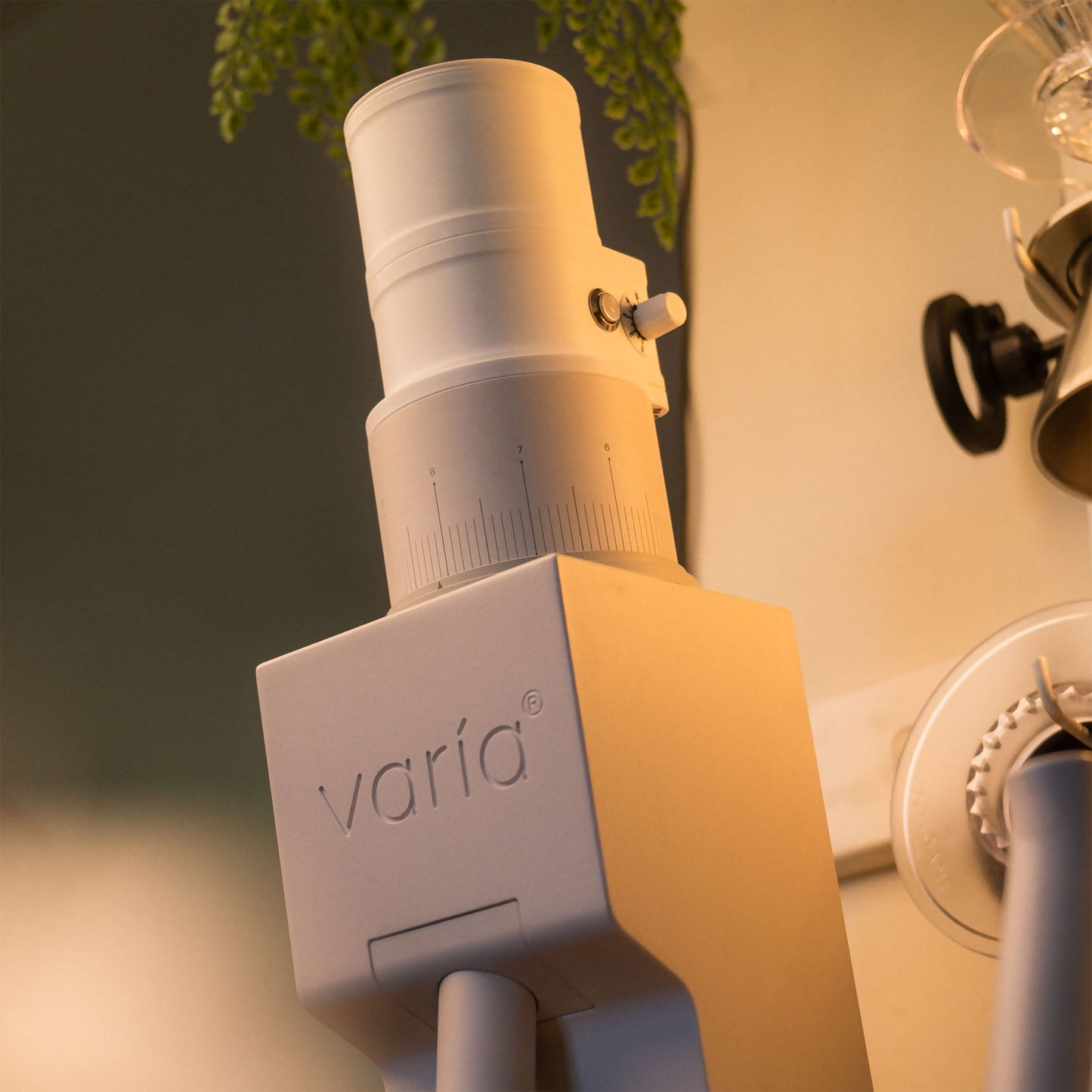
- Varia VS6
- Varia VS3
- Weber EG-1
- Wendougee Milo Play
- WPM ZP1
- Zerno Z1 / Z2
Si su molino no está en la lista, por favor contáctenos. Buscamos usuarios dispuestos a compartir las medidas de entrada de su molino y colaborar con nosotros en el desarrollo de adaptadores. ¡Los participantes recibirán un ARO Slow Feeder con descuento como agradecimiento por su ayuda!
¿Qué hay en la caja?
- ARO Slow Feeder™
- Adaptador específico para el molino seleccionado al finalizar la compra
- Tapa de tolva de bajo perfil
- Fuelle de silicona
- Guía de inicio rápido impresa
Cuidado y mantenimiento
La limpieza regular evita que los aceites, el polvo y los residuos de café se acumulen alrededor del mecanismo de alimentación. Apague el Slow Feeder y retírelo del molino antes de limpiarlo.
Limpieza de rutina: Separe la tolva y la carcasa de la electrónica, luego cepille o limpie el polvo y los residuos de café sueltos de la tolva, la placa de alimentación en espiral, el adaptador, los imanes y los pines de alineación. Mantenga limpias las superficies de fijación magnética para que la tolva y el adaptador se alineen correctamente y queden a ras.
Piezas lavables a mano: La tolva, la tapa, el adaptador del molino y el fuelle de silicona se pueden lavar a mano con agua tibia y jabón suave para platos. Enjuague bien y seque todas las piezas completamente antes de volver a ensamblarlas.
Limpieza de la carcasa de la electrónica: La carcasa de la electrónica contiene el motor, la batería, los controles y los componentes electrónicos, y no es resistente al agua. Limpie el exterior únicamente con un paño seco o ligeramente húmedo. Mantenga el agua alejada del puerto USB-C, los controles, el área del motor, las aberturas de la carcasa y el área debajo de la placa de alimentación. No enjuague, sumerja ni moje la carcasa.
PRECAUCIÓN: No coloque ningún componente en el lavavajillas. Evite limpiadores abrasivos, solventes y productos químicos fuertes.
Especificaciones técnicas
Vea el manual completo del producto ARO Slow Feeder™ aquí.
| Especificación | Valor |
|---|---|
| Batería | Ion-litio recargable interna, 1100mAh |
| Entrada de carga | USB-C, 5V CC, 500mA |
| Tiempo de carga completa típico | Aproximadamente de 2,5 a 3 horas desde la descarga total |
| Tiempo de funcionamiento total estimado del motor | Aproximadamente de 6 a 8 horas por carga completa, o alrededor de 2 a 3 meses de uso diario |
| Capacidad de la tolva | Aproximadamente de 45 a 50 g, dependiendo del tamaño del grano y del nivel de tueste |
| Tasa de alimentación | 20 gramos en 30 a 120 segundos; 0,17 a 0,67 gramos por segundo |
| Peso, sin adaptador | 200 gramos |
| Dimensiones, sin adaptador | 74 mm de largo × 74 mm de ancho × 99 mm de alto, o 130 mm de alto con el fuelle instalado |
| Duración del apagado automático | 5 minutos |
| Materiales | La tolva, la placa de alimentación, la carcasa de la electrónica y la tapa están hechas de polímero PLA de fabricación aditiva |
Aviso de patente pendiente
Patente pendiente. El ARO Slow Feeder™, incluido el dispositivo en su totalidad, el diseño del producto, el sistema de alimentación, la arquitectura de alimentación controlada de granos y las características de diseño funcional y ornamental relacionadas, son objeto de solicitudes de patente de utilidad y de diseño pendientes presentadas por ARO Espresso.
ARO Slow Feeder™ y ARO Espresso® son marcas de ARO Espresso / Secinaro LLC. Todos los derechos reservados.
Update: Nate saw my early review and fixed everything. Extraordinary after sale service. The new adapter is much shorter than the original and the v2 version addressed all my other issues. Very well done.
Original review: Only had it a couple of days but it stalled on the second cup. Pain in the .. to clear with beans in it. Could have been bad batteries. We'll see. The adapter for my DF83V sits on top of the 2.5" feed funnel so the whole thing is really high. Hopefully they come up with an adapter to replace the funnel instead of sitting on top of it.
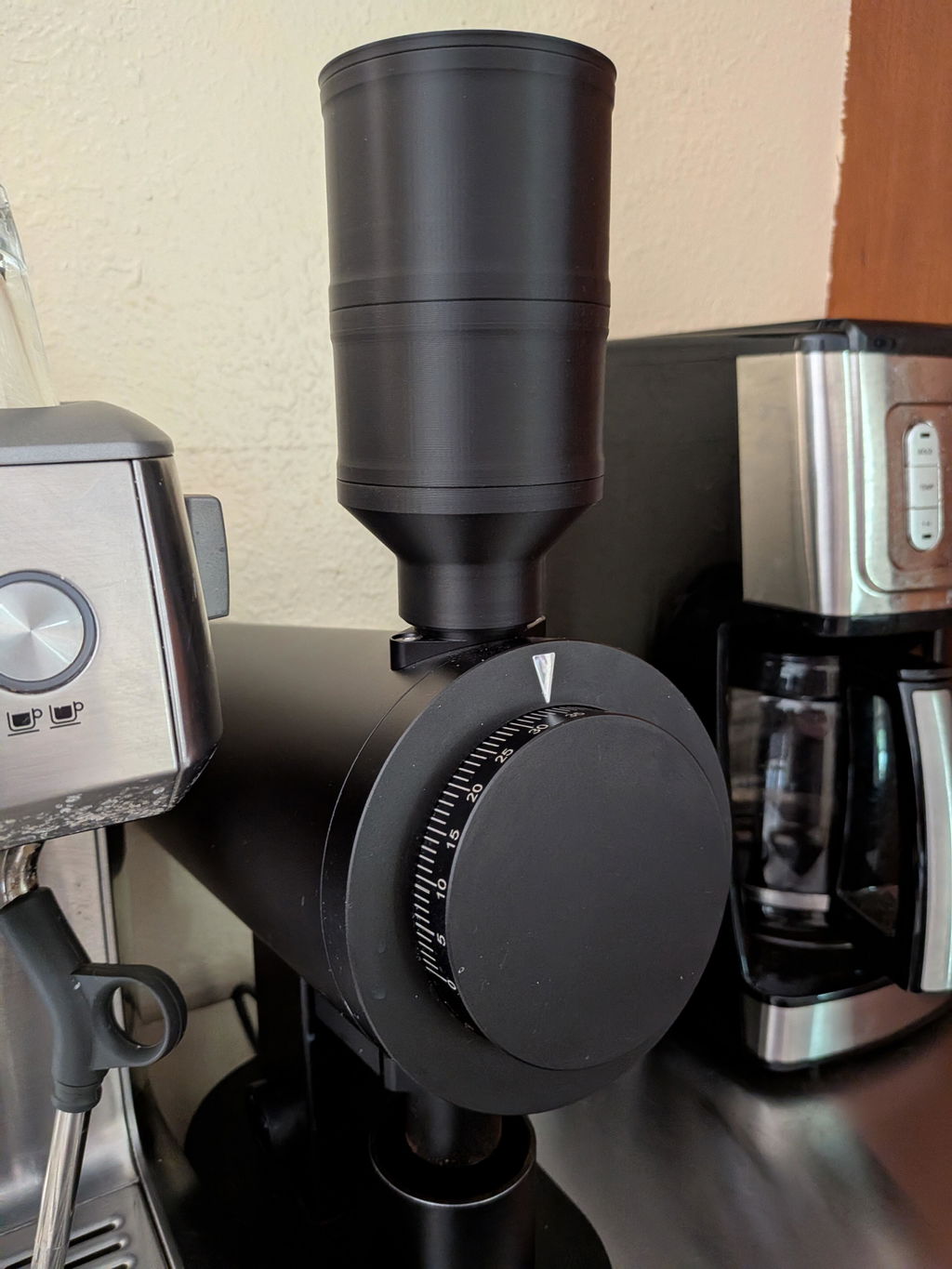
The device works, it needs some improvement which as per my understanding ARO espresso is working on a pro version of the slow feeder.
I have purchased the slow feeder with multiple adapters for my 2 grinders, one part initially didn’t fit for some reason.
I have contacted ARO and they were very Patient , Nate followed up with me to resolve my issues, and they have replaced my adapter and the O-Ring with no charge although by shipping 2 items separately to Australia, the adapter now fits perfectly ! And I am happy with the product and the costumer service .
The bellow could be a tad larger so it fits snug into the slow feeder and the magnets could be a bit stronger, but these are just quality of life notes, the product works great.
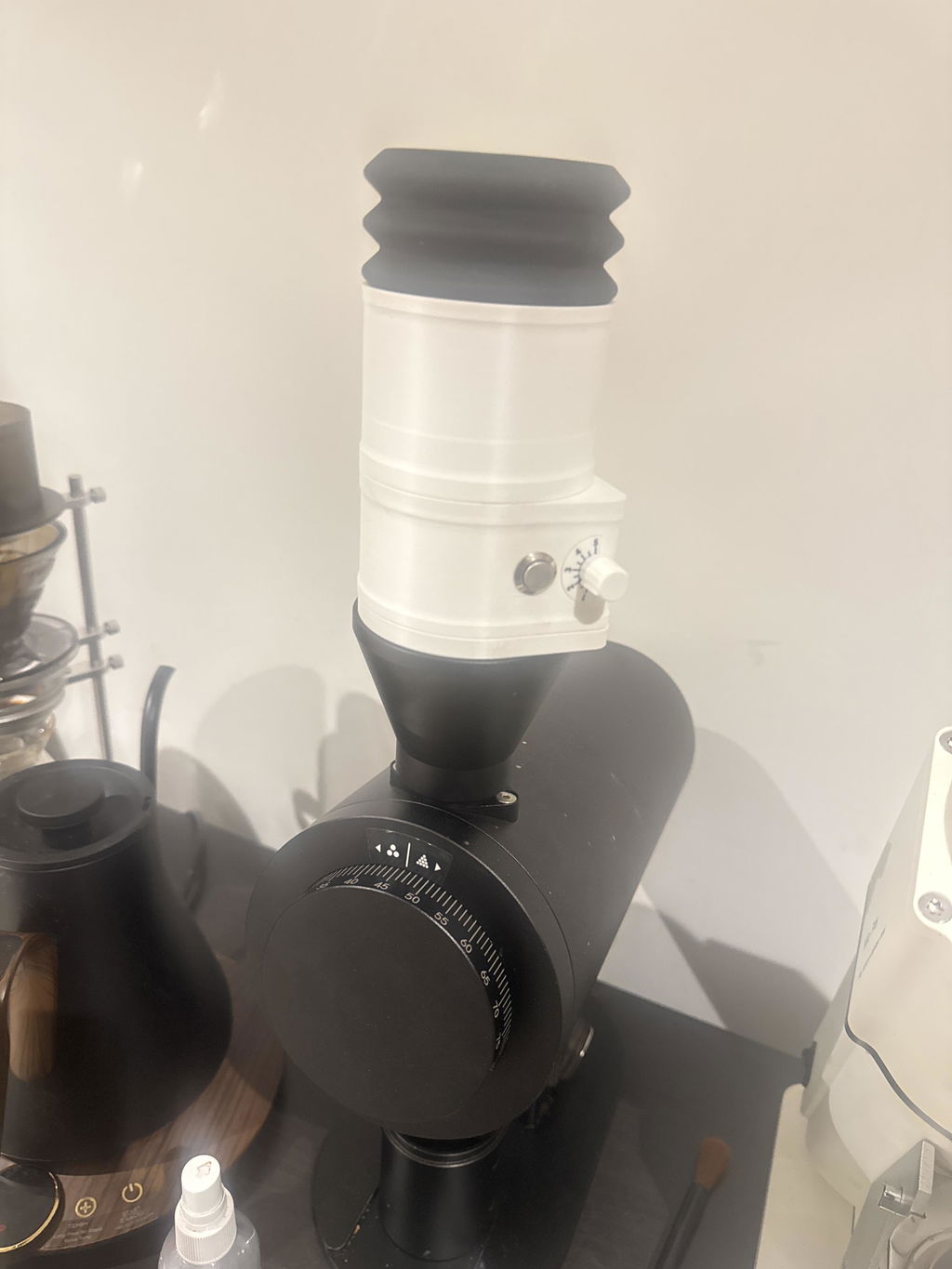
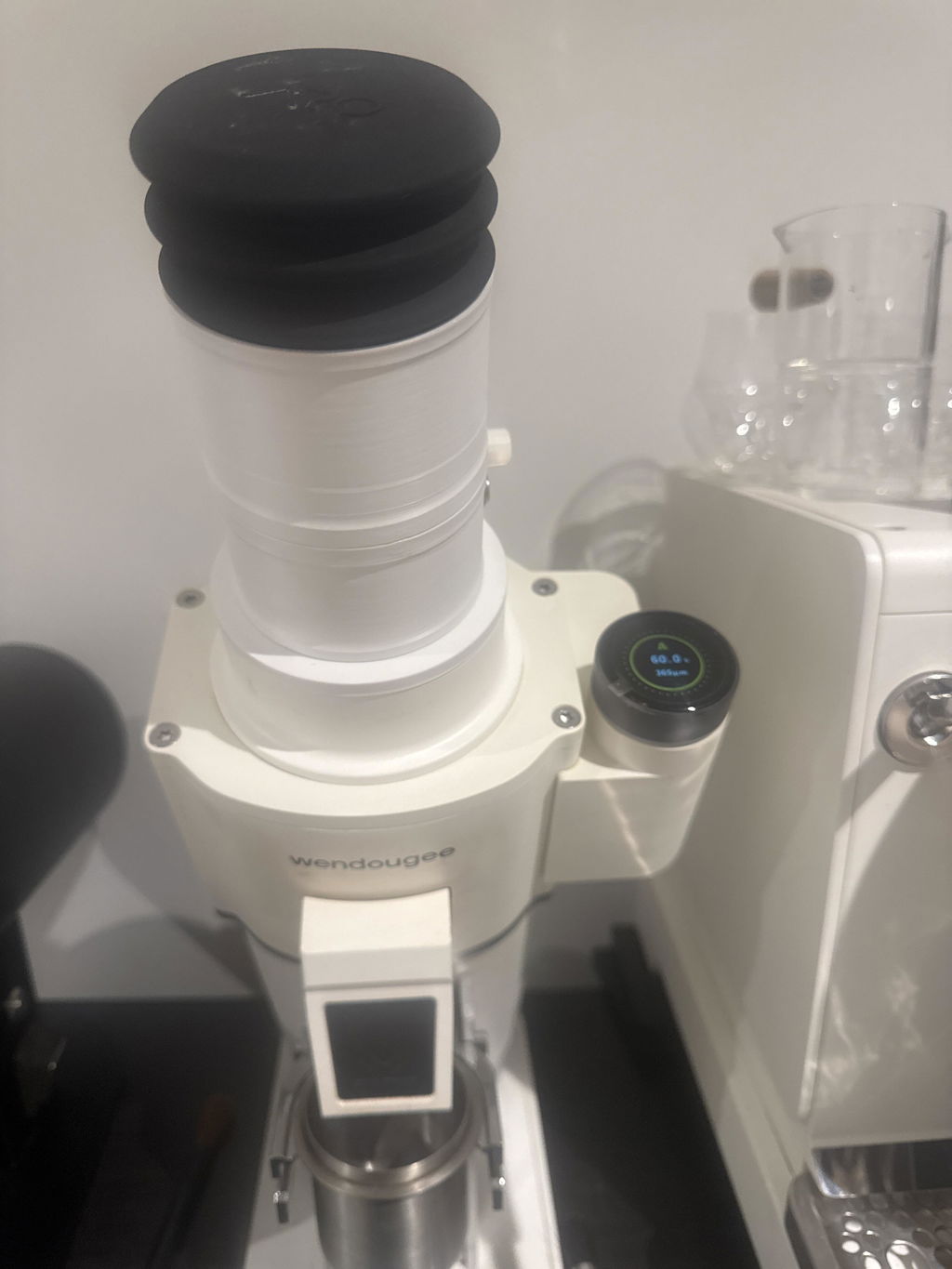
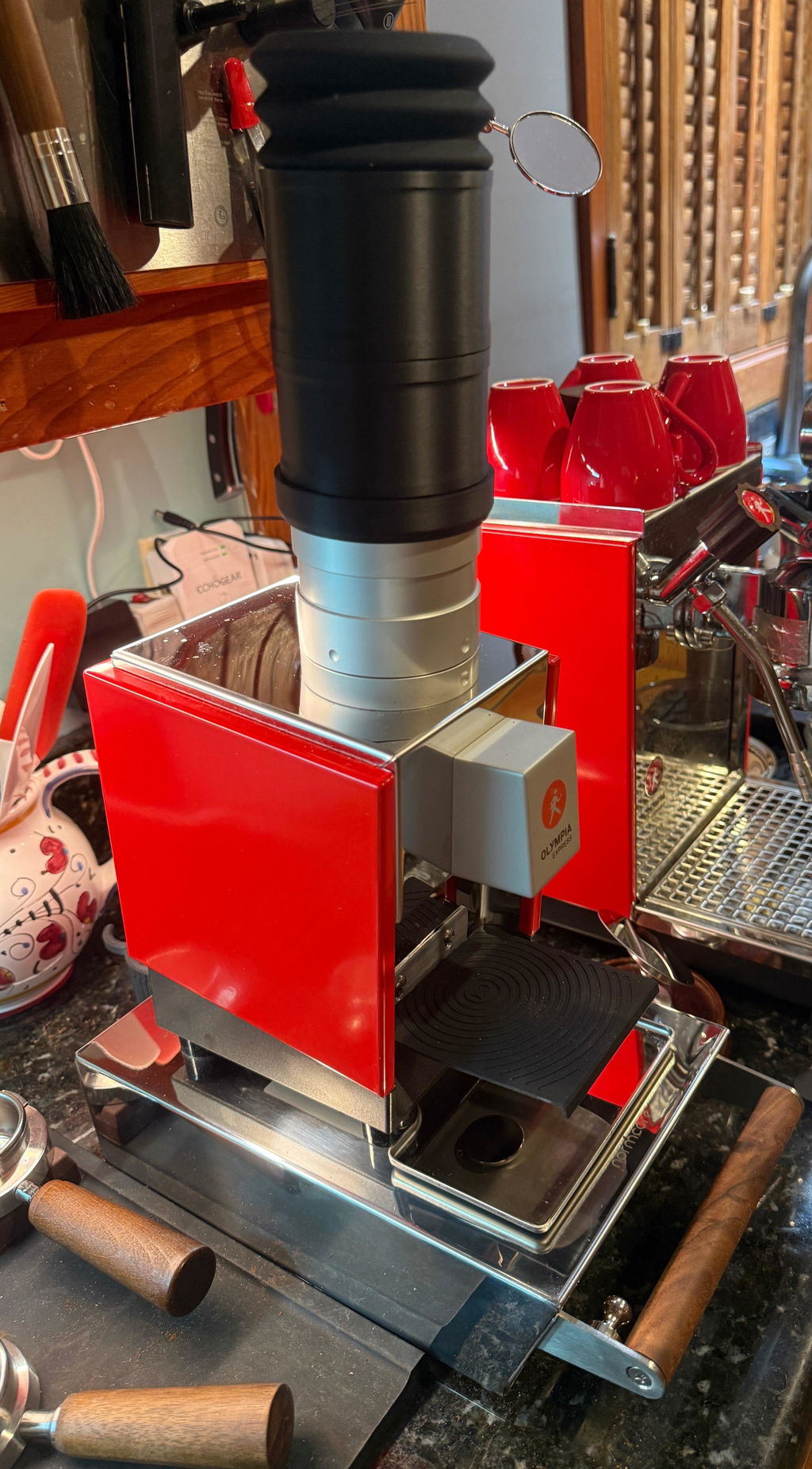
Where to start... I didn't realize 3D printing could be this intricate or finely detailed. If a CNC machine and a 3D printer had offspring this would be it! For my first step into automated slow feeding I did not intend to spend what would purchase a decent grinder. This looked promising. Was curious about the possibilities of acquiring one for my Olympia Express Moca SD. Took some accurate micrometer measurements with photos and emailed them to Nate on a Tuesday afternoon. Response within a couple of hours. Said he would make 3 prototype adapters of slightly different diameter to determine what would be a good fit. Told me he should have them created and ready to ship by the end of the week. He actually dropped them off to be shipped the next day, had them 3 days later! The first adapter I tried fit like a glove. It thunked firmly in place on the hopper. Since the Moca SD hopper has multiple functions for actuating the grinder, replacing the hopper with a slow feeder isn't really feasible, so it goes on top. The Moca SD has a small footprint, but it is kind of tall. Mine is sitting on top of a knockbox drawer, so even taller. I leave the adapter on the grinder, the slow feeder sitting next to it. I use the slow feeder as a dosing cup on my scale, then click it in place on the hopper and grind away. I've always been reluctant to use RDT unless it's really necessary. With this setup I'm not, and experiencing either no retention or occasionally 0.1g (I think all grinders have some retention, but I think an exchange is happening- a very small amount of grinds are expelled when using the bellows). I'm not enamored with the portafilter fork on the Moca SD. I fabricated a small shelf that allows me to rest a bottomless portafilter or a blind shaker on it. With a dosing funnel on the portafilter, the obviously slow feeding allows me to move the portafilter around and evenly (mostly) distribute the coffee in the basket, so the time invested during grinding cuts down in some puck prep later. After the dose is in the basket I remove the slow feeder from the adapter and place it where it will sit until the next use, at the same time verifying that I turned off the slow feeder. I'm now dialing in settings, speeds and times with different coffees and baskets. Some gadgets and techniques added to your workflow end up having questionable or no positive benefit. The first shot I pulled was clearly different than without, with the shot revealing some new flavors and characteristics (good ones in my opinion!). I don't have a sophisticated palate, I just know what I like. I would like to improve that, but I'm the only one that has to be pleased with my results. I'm 72 and not really interested in becoming an "influencer". However, when someone provides exceptional service and what I consider to be a good product with value that is beneficial to me, I think they deserve credit for it. Everyone has their own opinions regarding coffee and coffee equipment. This is one of mine :-).
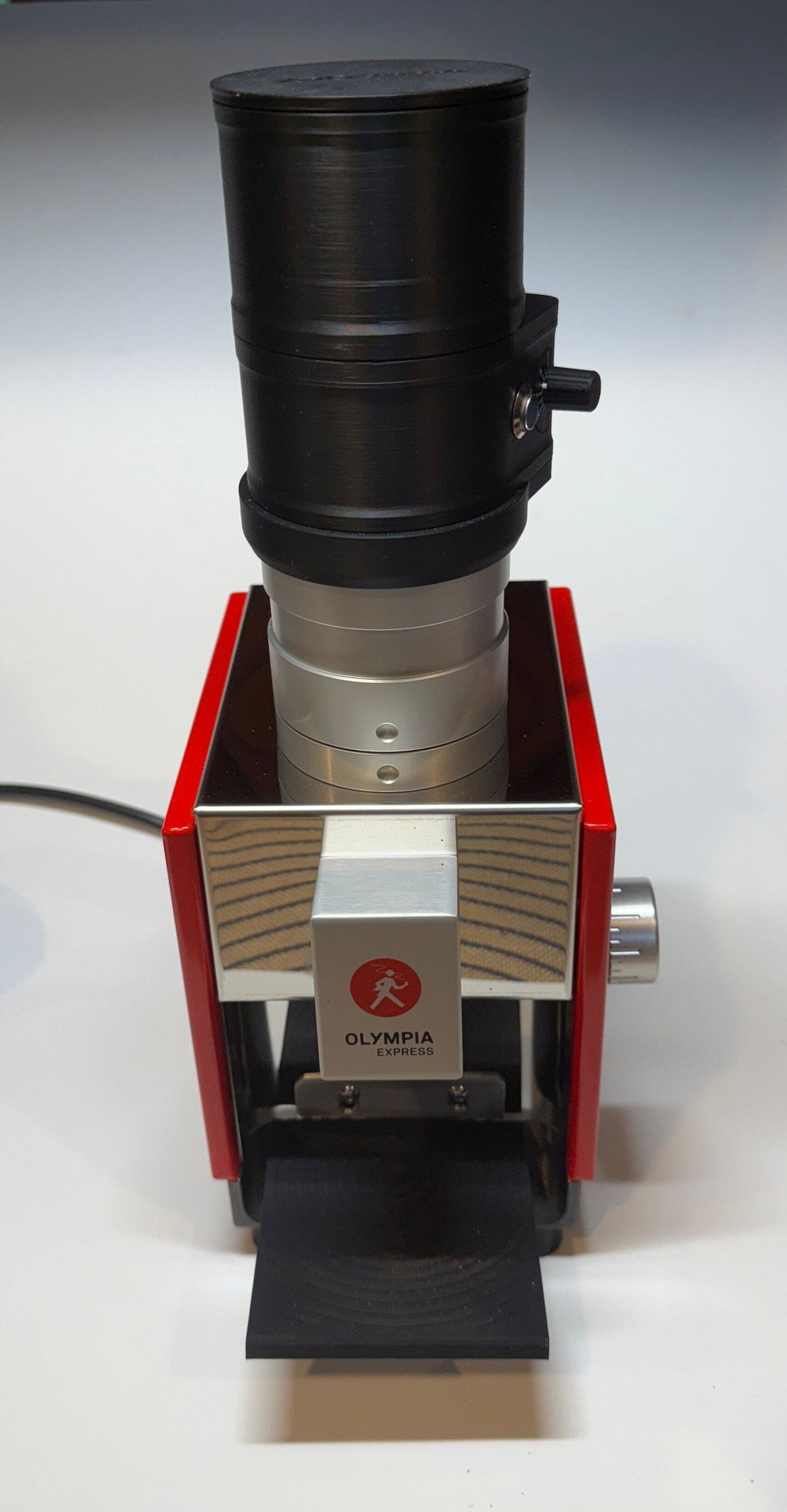
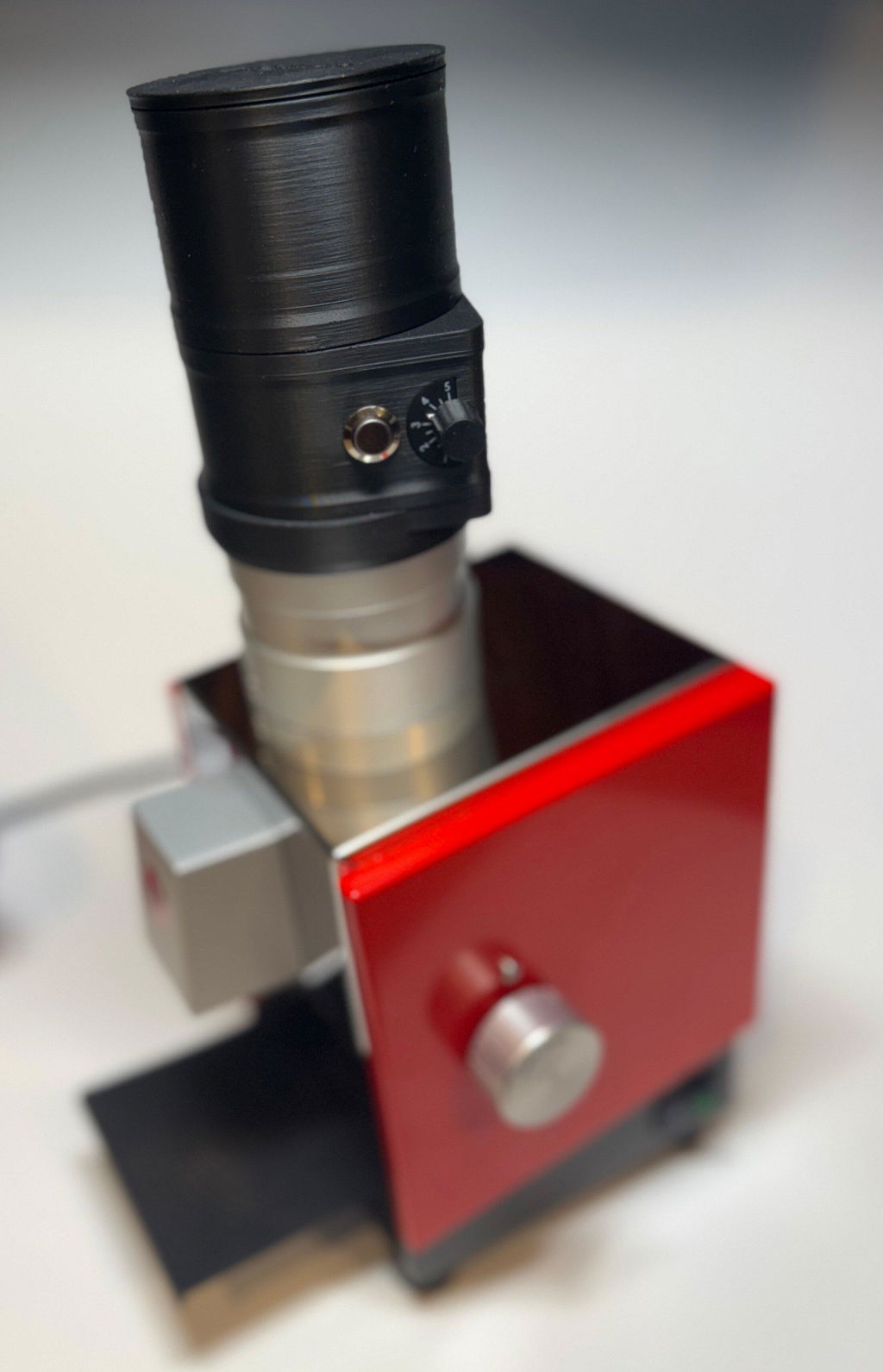
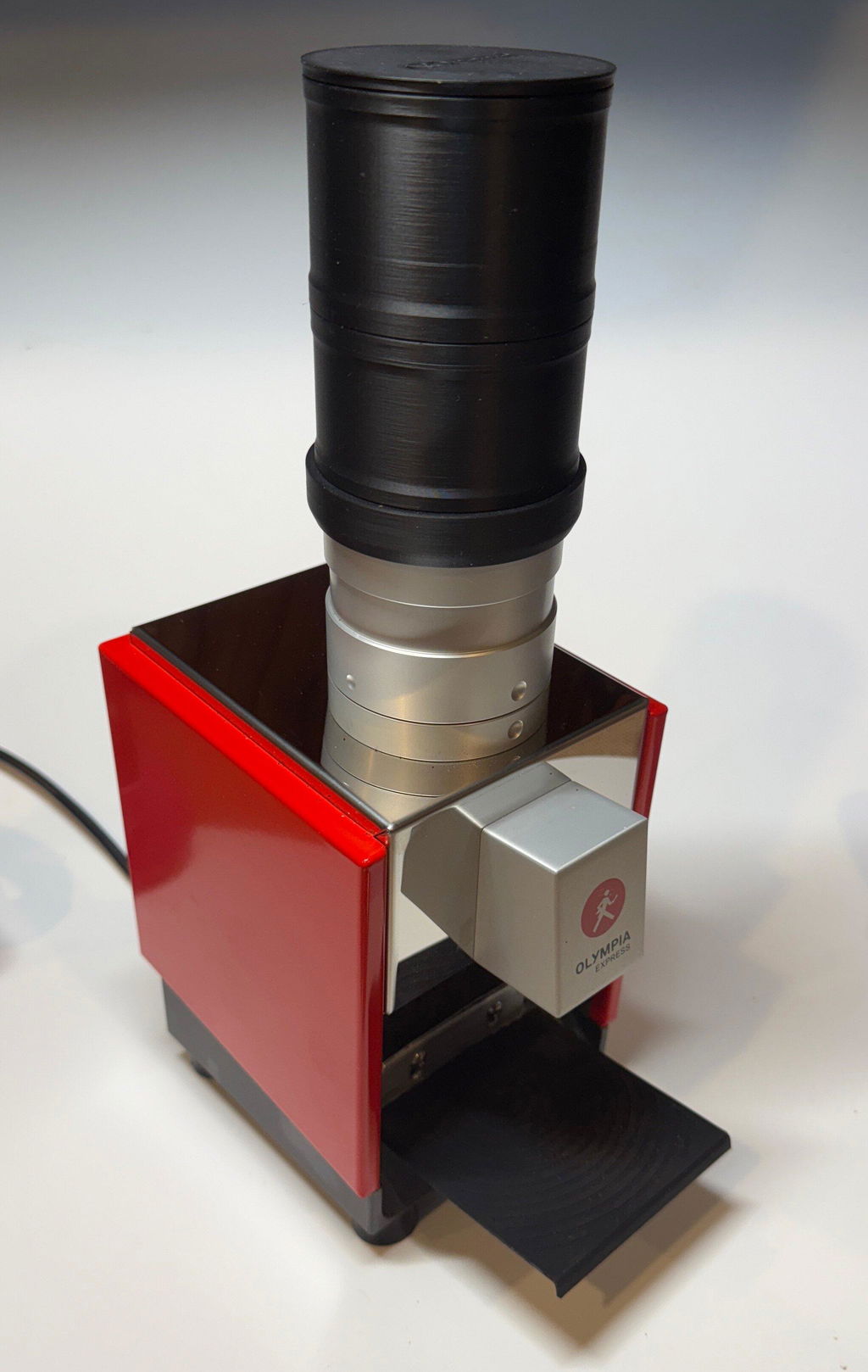
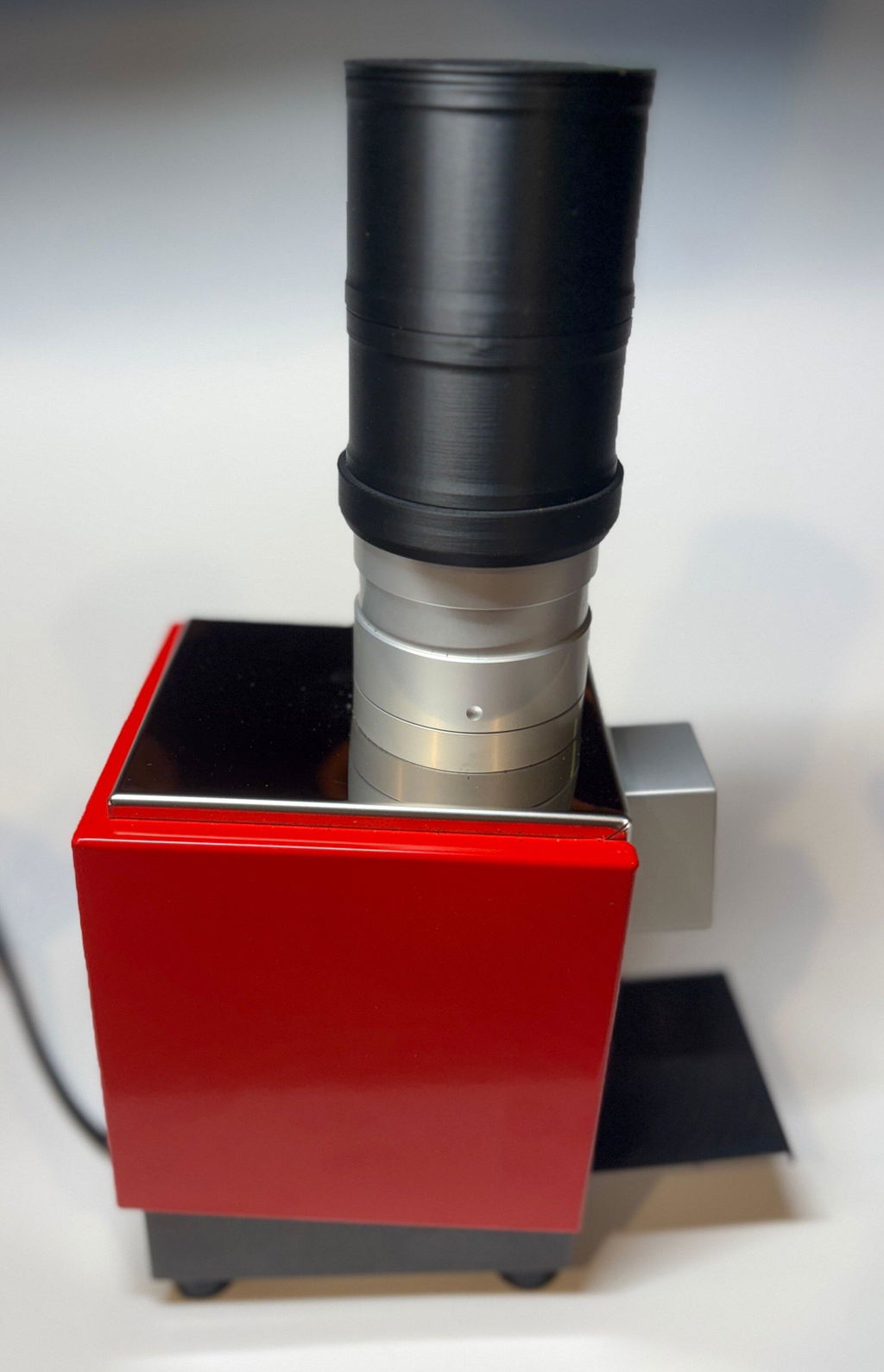
I am very happy with the device. Even though it is 3D printed, it is well made. The most important thing is the result in the cup, and it is excellent. The best coffee I have ever had.
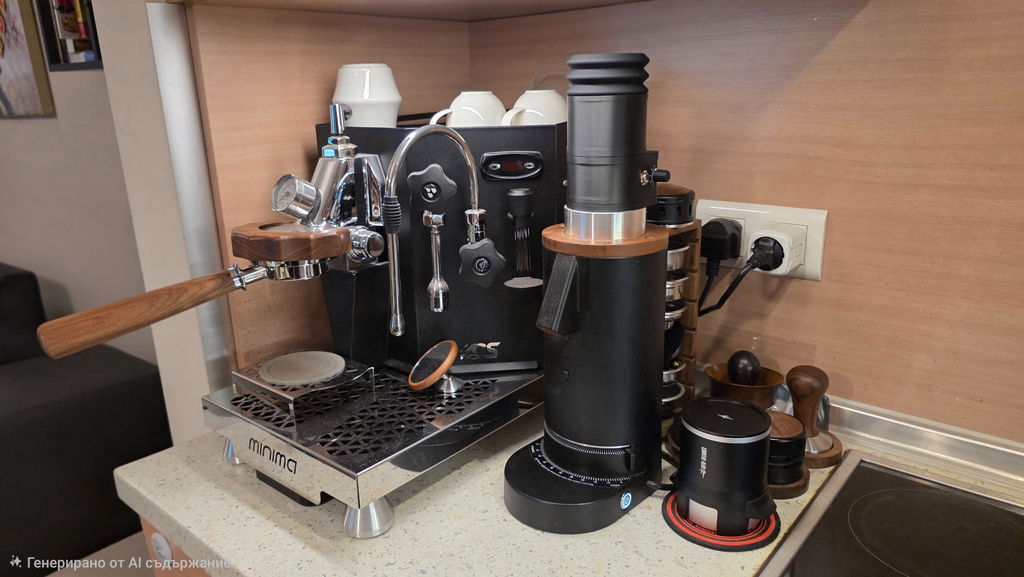
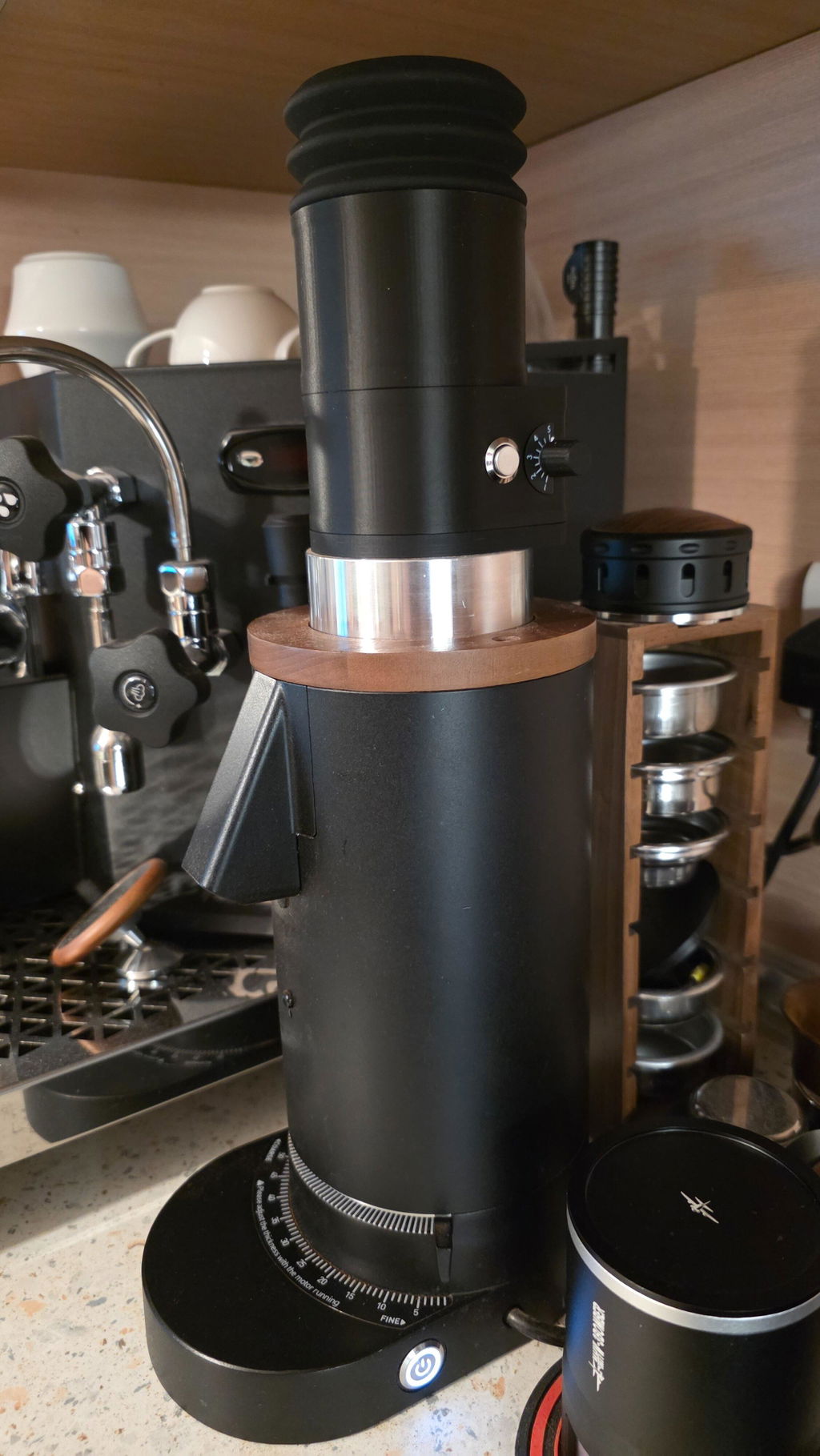
I’ve been looking at a lot of reviews on the capability of a slow feeder and what it does to improve your grind size consistency, and I’m pretty convinced this is a major improvement to my workflow, it takes a little extra time to get your grinds through it at a slower pace, however, the consistency and fluffiness of the grinds are incredible. I don’t have much channeling due to this and puck prep.
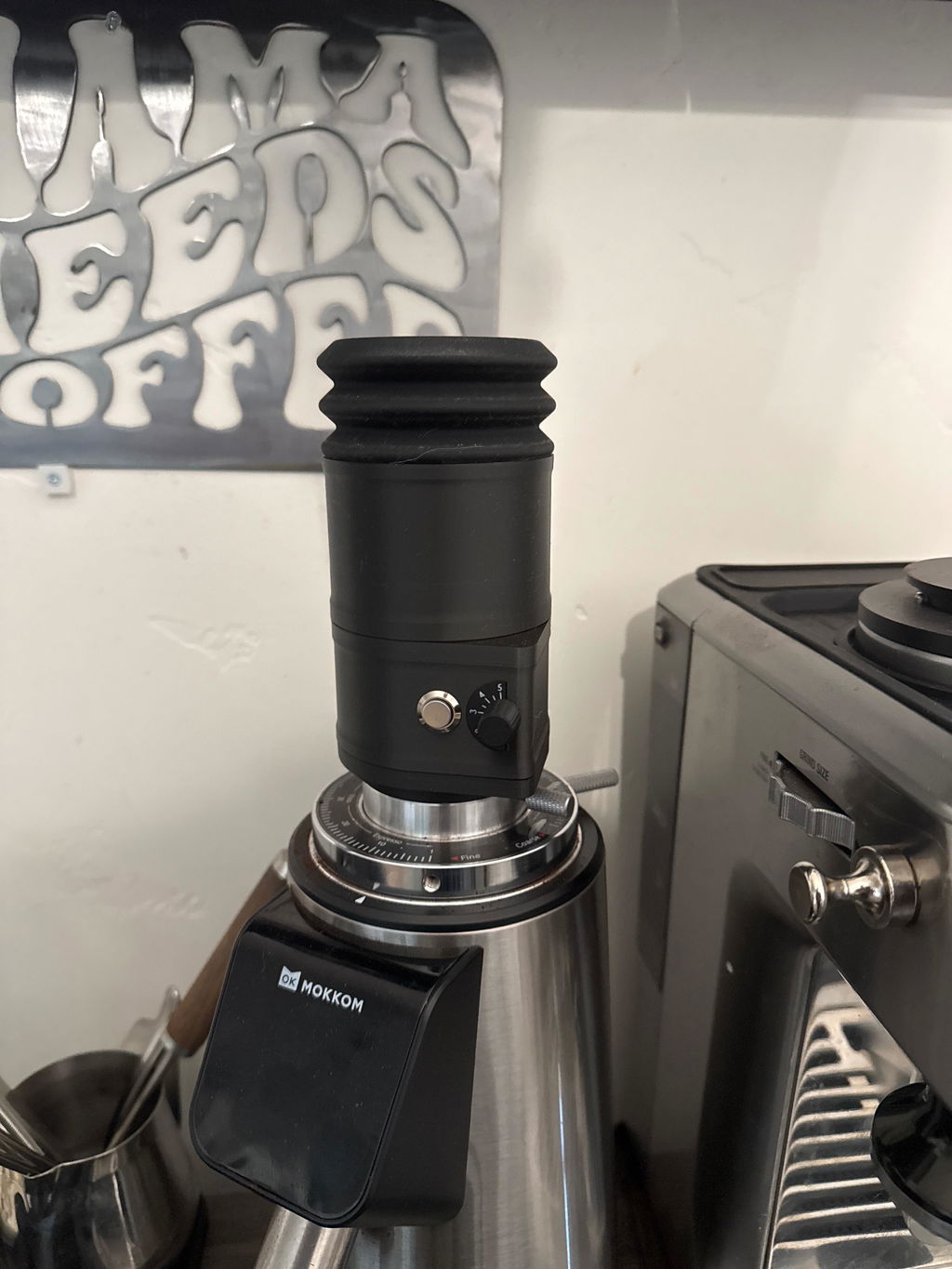
The ARO Espresso Slow Feeder is a mandatory upgrade and a total game changer. It completely eliminates the "popcorn effect" that leads to muddy-tasting shots, resulting in a much cleaner and more consistent espresso every time.
I used to manual-feed beans to get this result, but this unit automates the process perfectly. I’m getting 10x better flavor with zero hassle. Excellent build quality and the customer support is top-tier (they handled an adapter issue for me immediately). Don't overthink it—this is the best move for your espresso setup. This unit can make even a modest grinder deliver maximum flavor without breaking the bank.
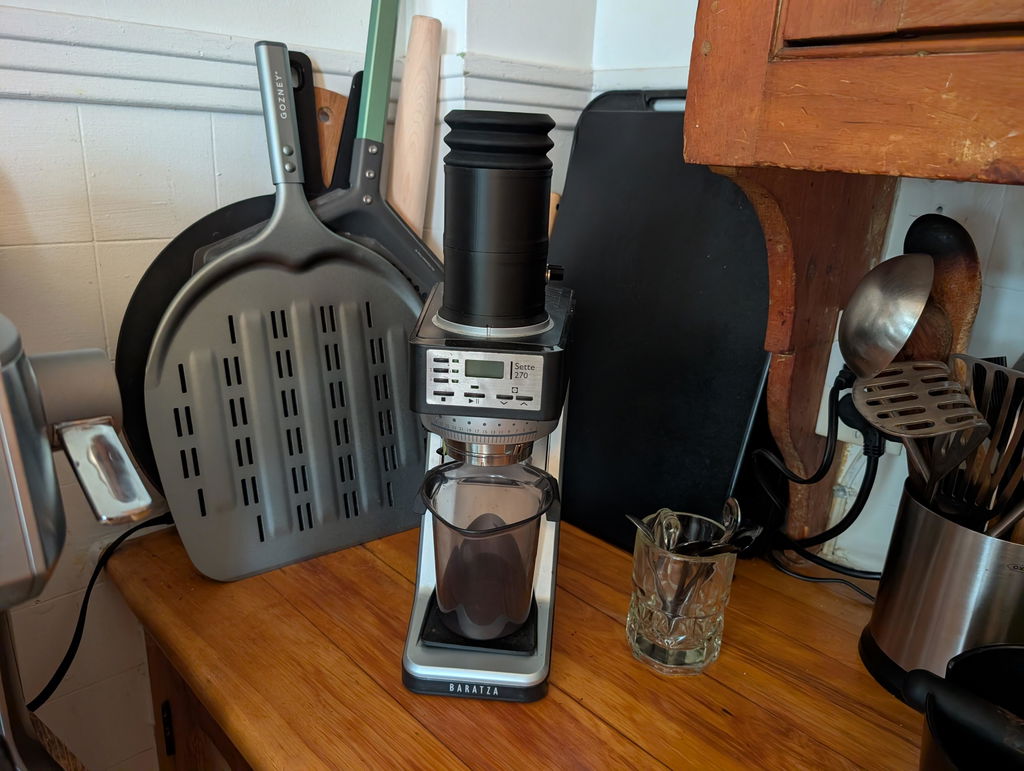
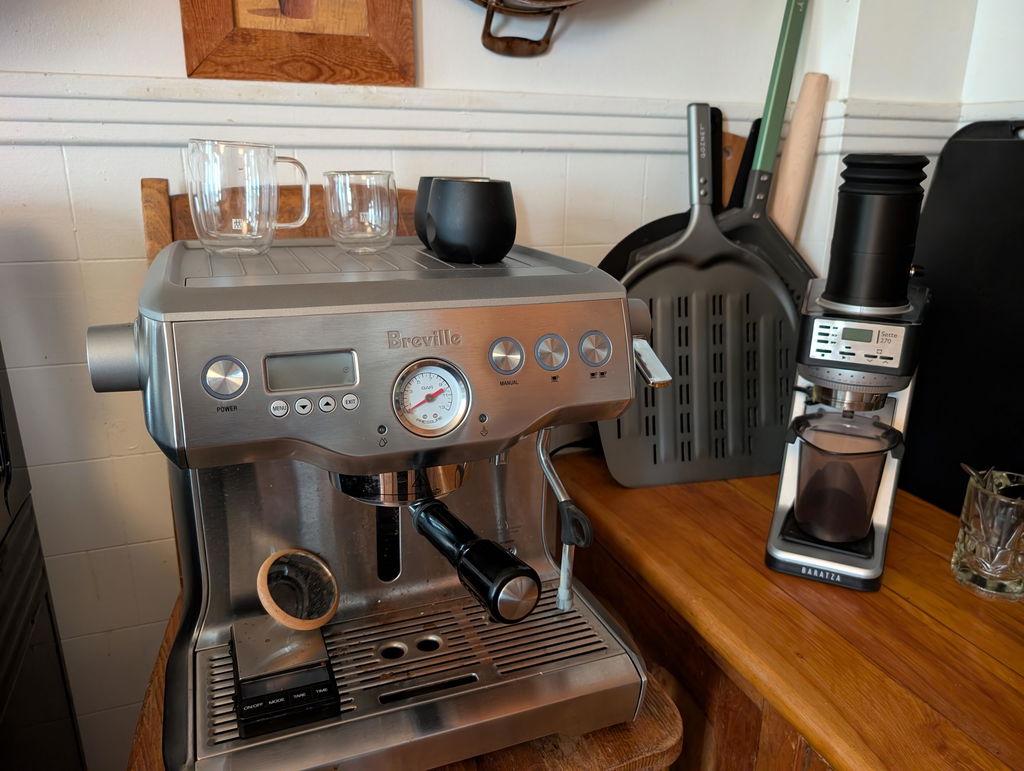
Works great, sleek design.
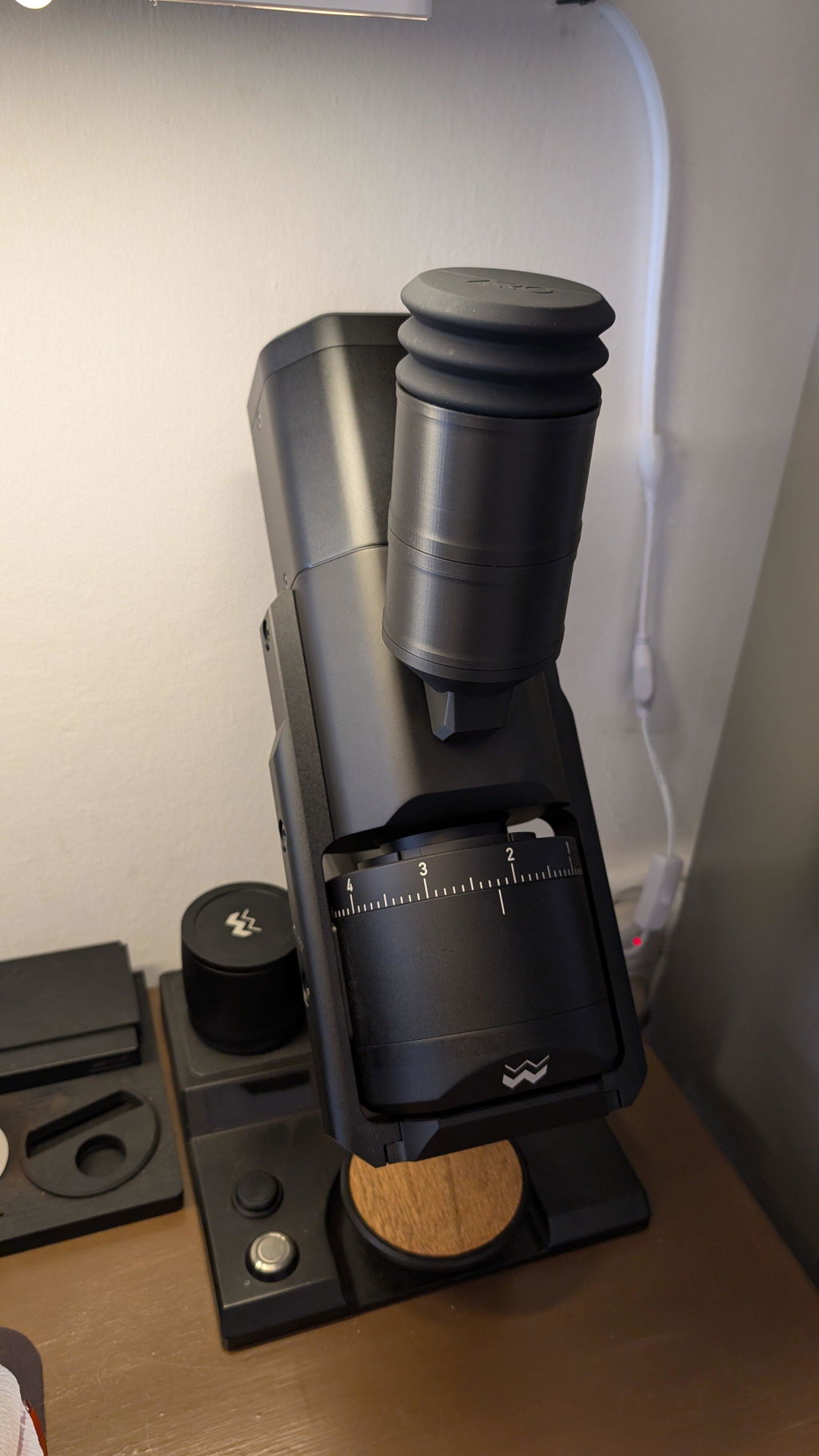
I use a Weber EG-1 and as much as I hate swapping out the funnel of the original with something else, the slow feeder was a game changer.
The EG-1 is already amazing, but even so, the slow feeder makes a difference. The ARO slow feeder has a sleek design and the color fits the EG-1 perfectly.
A few mild cons which would never stop me from buying ofc.
1. Some times there are a few stragglers, 1 or 2 beans that won't go down without a small push, I feel this happens because of RDT and the materials used. This means I just have to make sure to remove the bellow to check for any and put it back on.
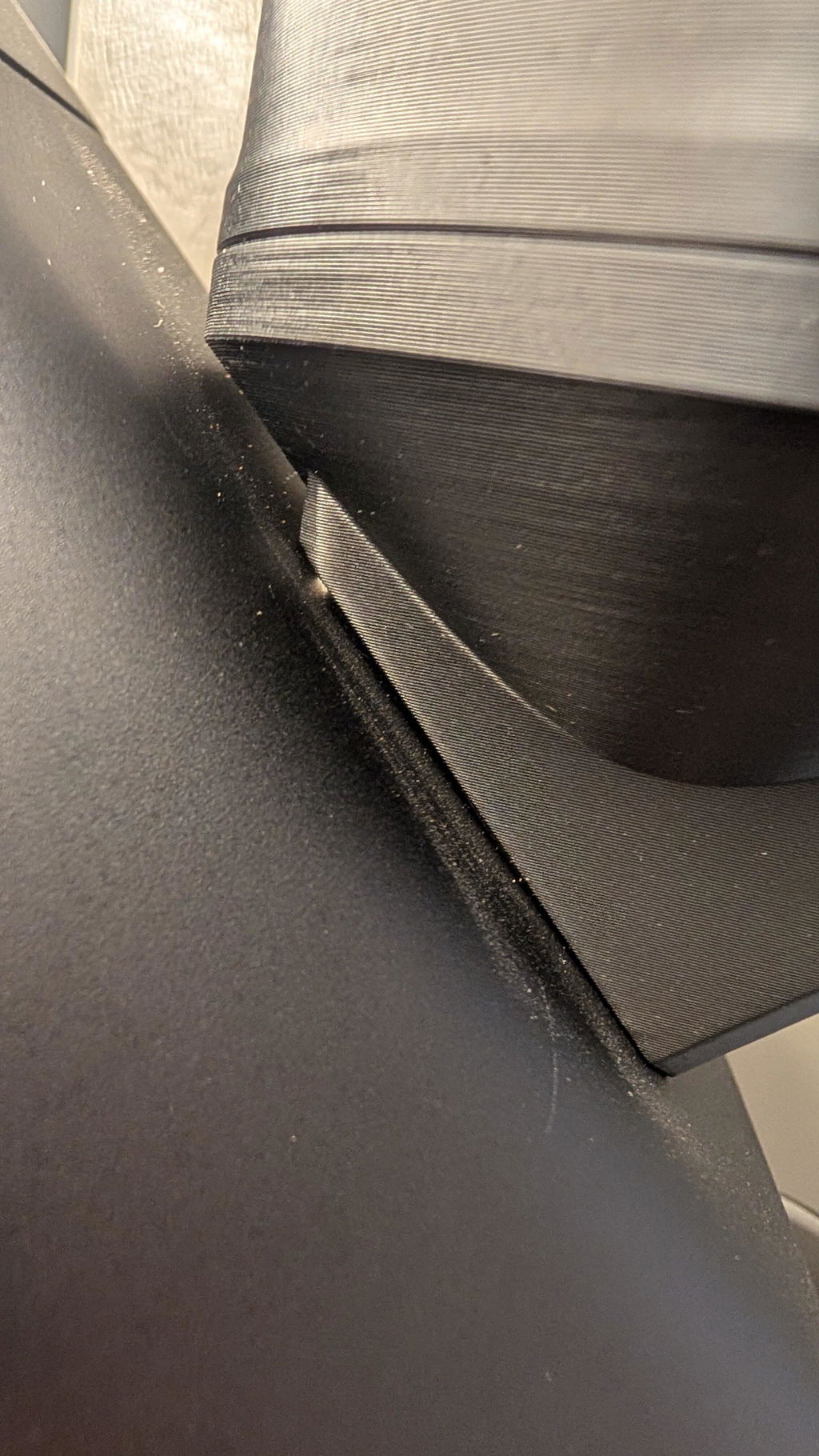
It seems the adapter that does perfectly fit the Weber EG-1. I will attach an image but it doesn't fully convey the feeling in real life. The product works well, but it doesn't seem to sit flush.
Bottom line, I highly recommend this product. I previously had the single dose hopper for my Eureka Specialita and it felt and looked amazing. Most likely all products by this company are good.
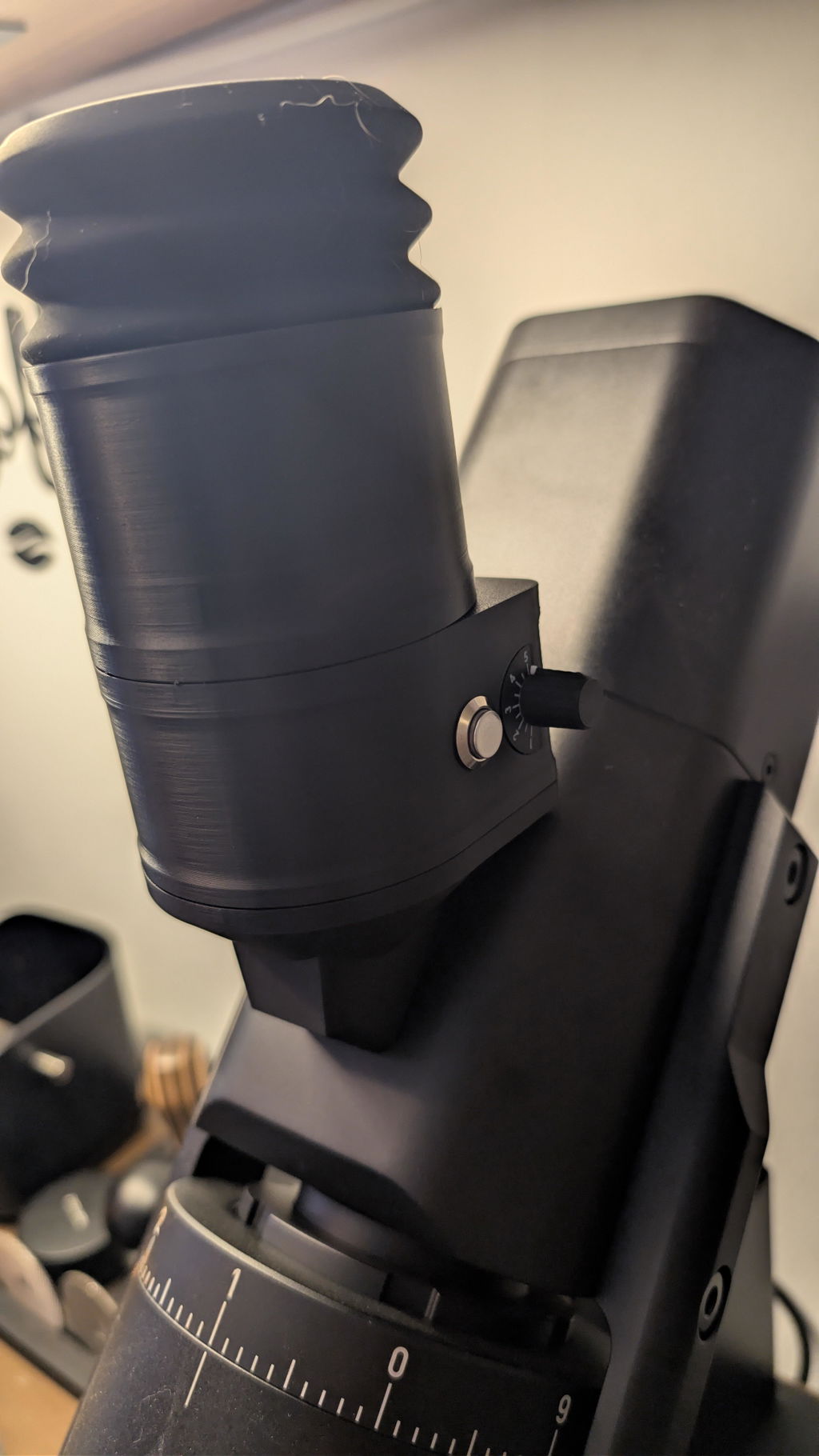
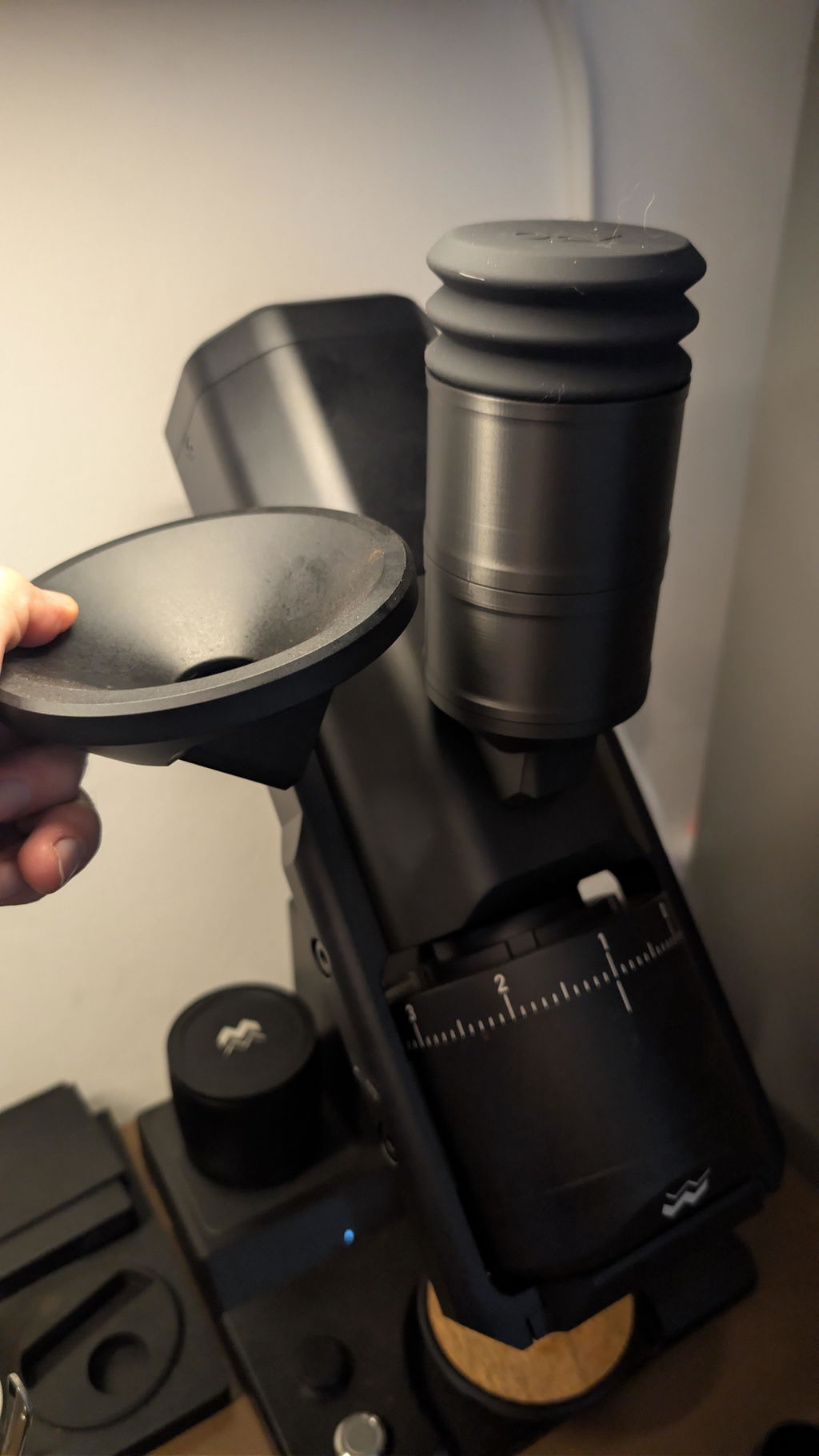
After reading about all the different slow feeders on the market, I decided to go with ARO, and I'm so glad I did. I reached out to see if they could make an adapter for the Lagom P100 (not one of the options at that time), and Nate reached out the next day to ask for the needed measurements. He then sent three adapters of different sizes to see which fit best. It's hard to imagine another company could provide better support. The slow feeder has worked exactly as expected, and unlike some 3D printed products I’ve ordered in the past from other companies, this one feels very sturdy and has an excellent surface finish. Soon after ordering, I saw that another company was planning to release a feeder made of metal and glass (for 3x the price of the ARO), but after using the ARO for a month, I definitely made the right choice—the quality is exceptional!
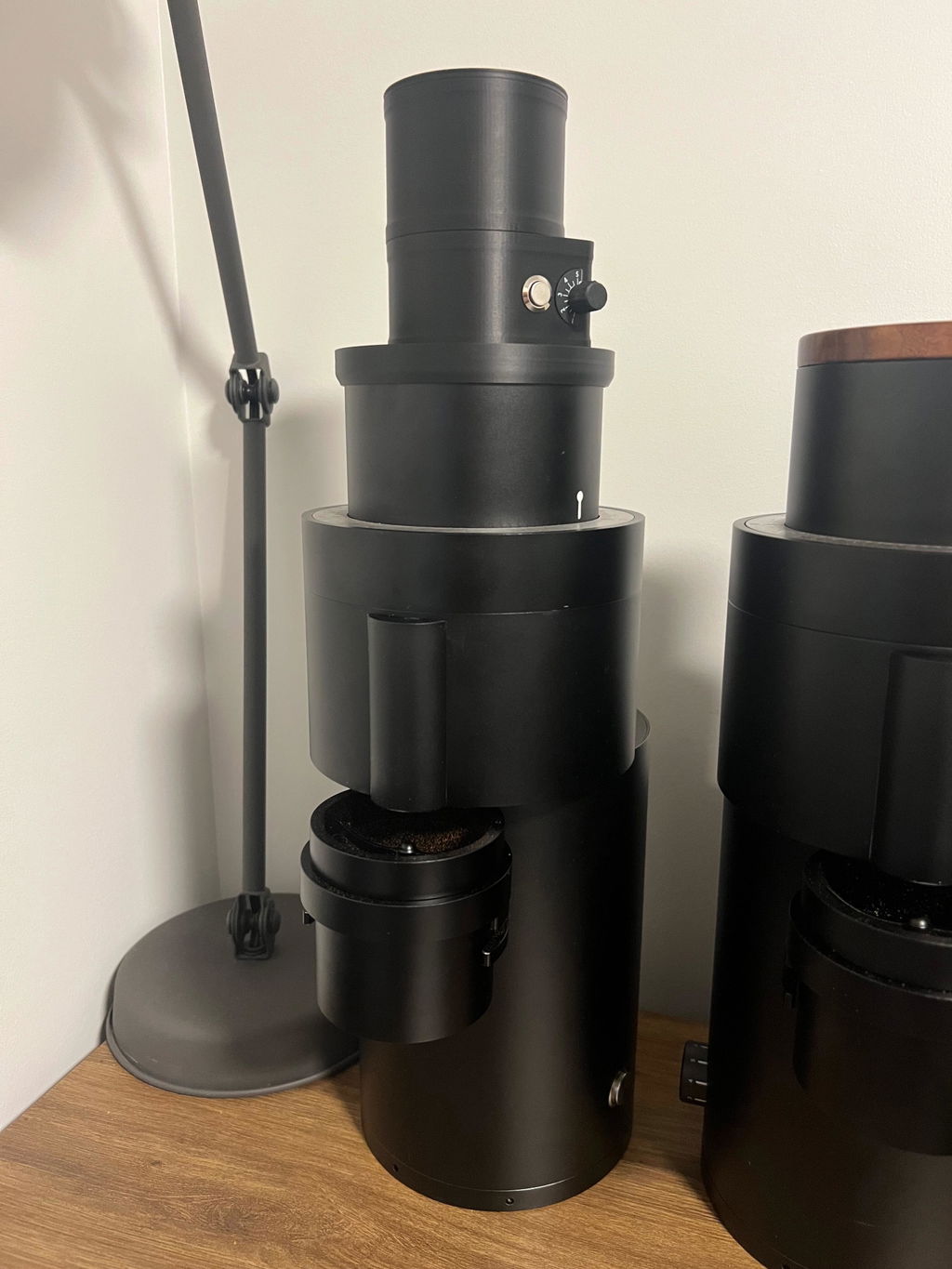
In general I run away form 3D printed stuff, but this product is well made and I stand corrected in my generalization. I love the use of the (powerful) magnets and the separations of the various components.
I use it with a FELLOW OPUS grinder and this slow feeder helps lowering its retention and probably improves the consistency of the grind size. I also use it for my filter coffee which is a bit time consuming for every day use :-) However, I do use the slow feeder adapter lid and the bellow, which I think is more discreet and efficient than the big bellow I was using prior.
I also like the idea that when I upgrade to a more expensive espresso grinder I will be able to contact the ARO team and get a lid for it.
I had contacted the team for an OPUS version which was not on their web selection list. A few days later I had it (coincidence they were getting a grinder to test). Great team support.
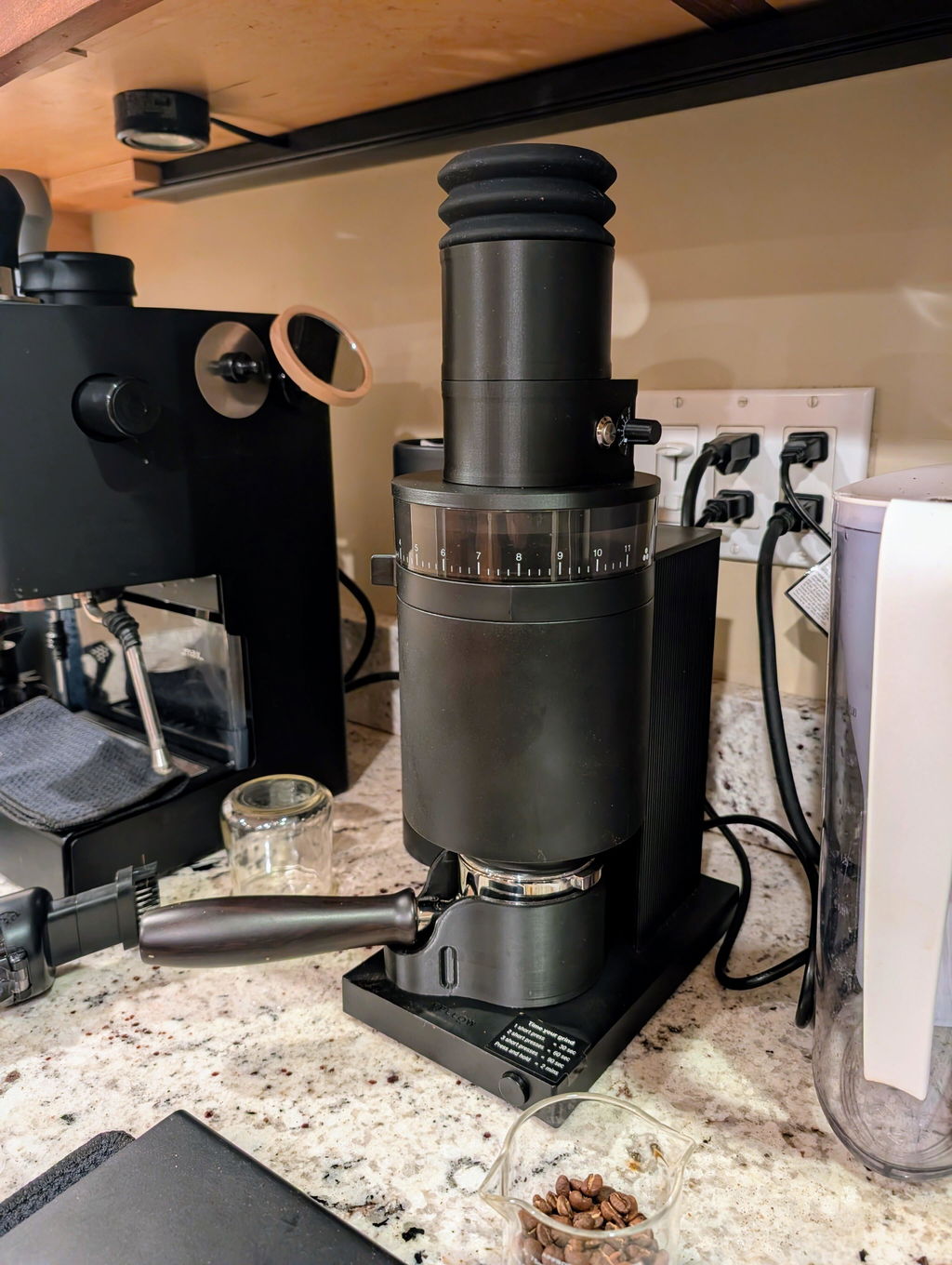
I think this mechanism of slow feeding beans will become the standard for grinders in the future, and this device has brought the consistency of the future while freeing me up for 1-2 minutes of time every time i pull a shot that I was spending hand feeding. It does exactly what it says it will do and I have yet to have any issues. I feel it is more than worth the money at this point, assuming it lasts me years.
If I had to nitpick, the magnets could be just a touch stronger so that the tower doesn't separate as easily.
Slow feeding gives a very noticeable improvement in particle size distribution. But who wants to stand over their grinder manually feeding beans one at a time (tried it -- no bueno). Slow feeding immediately shows in the cup with, along with other things, improved clarity. The build quality is surprisingly good. Even the included quick start pamphlet is surprisingly well-written. Nate also provides excellent customer support. My only niggle with the feeder is the fit of the bellows to the hopper is sloppy and could stand improvement.
Beans get stuck & needs batteries. At that price point it should have rechargable usb-c and better build quality. Im sure with more options and competition better brands will come out.
Thanks for the feedback! This review is for the original v1 Slow Feeder, and we’ve addressed these issues with the new v2 version. The v2 now has an internal rechargeable lithium-ion battery with USB-C charging, plus an improved feed mechanism designed to prevent beans from getting stuck and automatically reverse if a jam is detected.
Please reach out to me if you’re interested in upgrading. I’d be happy to provide you with some options.
Updating my previous review to four stars because good customer support!
Works as supposed to and great support from the seller
Must have upgrade for Timemore 064S.
Good material and easy to use. The own problem is the vat for France i must pay 31 euros more....
I bought for my p64. It leaves 5-6 beans in the slow feeder and I have to manually flick them into position every shot. Rather annoying. In fact it bothered me so much i ended up just removing it from my grinder
Thanks for the feedback, Sam! This issue has been fixed in the new v2 Slow Feeder. We increased the feed plate thickness to ensure all beans feed properly, including when installed on angled grinders like the Lagom P64. This review is from the original v1 version, but please reach out to me and I can provide you with options to upgrade to the improved v2 unit.
For myself, my decisive criteria was that it should feed the grains at least as well as I do myself. It succeed into that and better. Yet it could do be greatly enhanced :
- stalling should not exist but it will happen with any beans if the ARO is set near or below "1". It is a known problem, part of your faq. Yet, since part of the advantage of the ARO is facilitating the prep, it should be "set and forget". Which lead to my next point...
- the lowest, non-staling setting, slightly above 1, is still too fast for my taste. It delivers 18 into less than a minute. I'd like slower speed, for Turkish coffee or even the finest espresso. I use a filter at the bottom of the basket, which accelerates the extraction quite a bit, and I use a blind shaker which accelerates it further as does slow feeding. In the end, I must grind quite fine if I hope that the puck will offer the needed resistance.
- I got the DF54/DF64 adaptor. On one hand, it necessitates that I remove the anti popcorning insert, with for consequence that it renders the cone shaped inlet of my grinder extremely dirty, instantly, rendering a perfectly low retention grinder not so much it. Your otherwise neat contraption becomes quite counter productive.
On the other hand , the adaptor has barely anything to cling onto, about 2 mm, maybe 2.5. That causes instability, which can only get worse with time. A simple solution would be to fit the adaptor around the inlet ; as such it could reach further, ensuring stability and restoring the popcorning protection. With the later in place, chances are also that the beans will be ground in a more controlled fashion.
I will not activate my satisfaction warranty. I hope that you'll repay my time with a better product some day.
Regards to all,
Jean Montambeault
Thanks for the detailed feedback! This review is for the original v1 Slow Feeder, and several of the points you raised have been addressed with the new v2 version.
The v2 now has an anti-stall system, so it will no longer stall when running at the lowest feed speeds. We also completely redesigned the DF54/DF64 adapter. It is much more secure and stable, and you no longer need to remove the grinder’s anti-popcorn insert.
I really appreciate you taking the time to share such detailed feedback. It directly helps us improve the product.
I wanted to find a better method in feeding coffee beans into my Timemore Sculptor 064S. And the ARO slow feeder seemed like a great option. While I do love the results, there are just a little nitpicks that I have against it.
1. I wish there was an auto-off feature. The Timemore grinder automatically turns off after 60 seconds. And maybe I'm just use to the grinder shutting itself off, I assume that the slow-feeder will as well. Well ... it doesn't shut itself off. And I've already burned through 6 sets of AAA batteries within 2 weeks. So I would advise that if they ever update the product, include the auto-off feature.
2. Include instructions. Maybe it's easy for the maker of this product to know how to install it. And if a person is paying over $100+ for something, have some kind of instructions or manual. But I had to guess my way through the installation process.
Other than that, it does work exactly as expected. I enjoy using it. But as I said, I'm wondering if I need to go buy more AAA batteries.
Thanks for the feedback! This review is from the original v1 Slow Feeder. The new v2 has a built-in rechargeable battery with USB-C charging, so no more AAA batteries. All Slow Feeders also now include a printed quick-start guide with a QR-code link to the full product manual and installation instructions.